



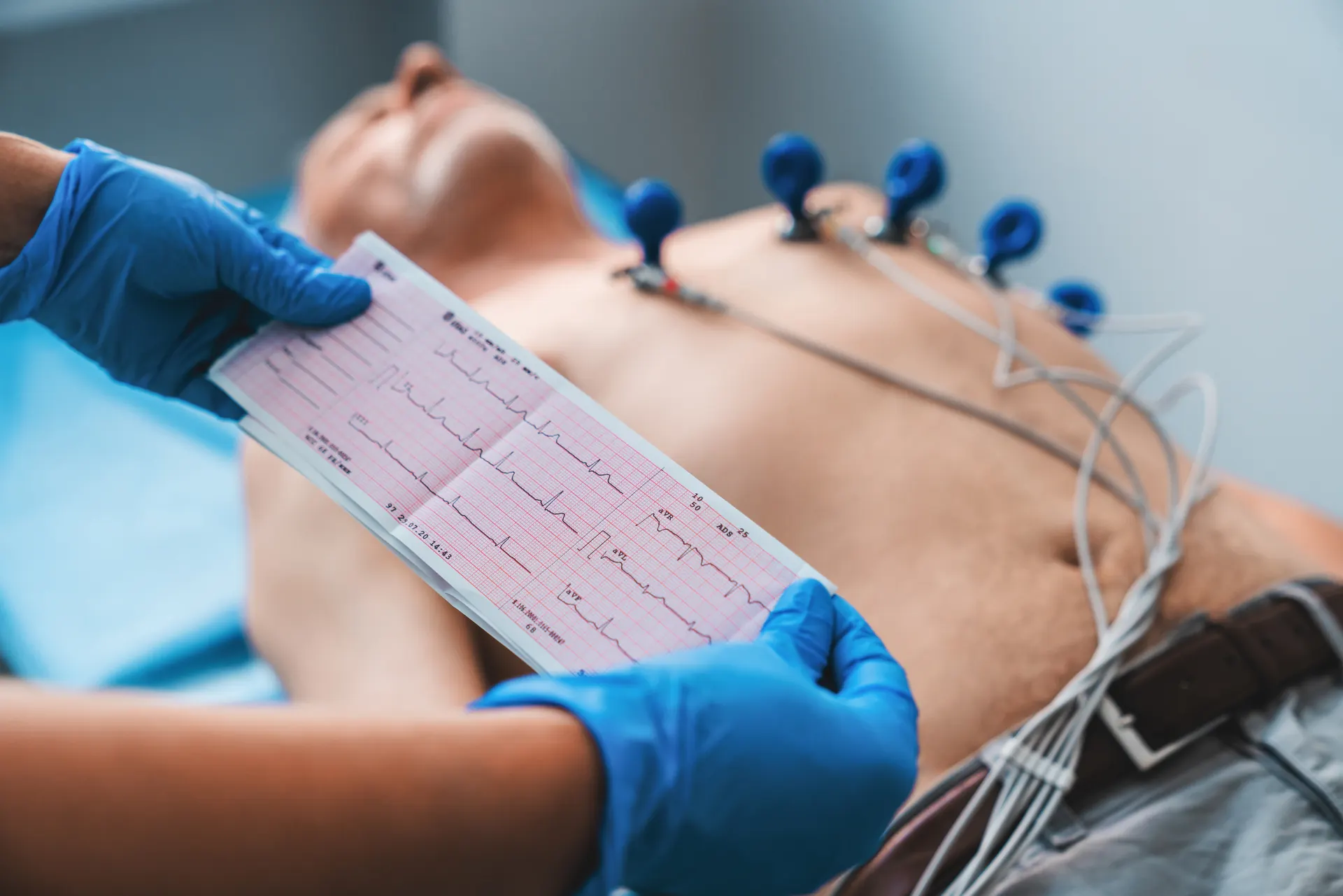
Read every ECG
with confidence.
Get 9 accredited CME hours doing it.
A two-day, hands-on ECG Interpretation course in Jeddah — taught by cardiologists and built for family, internal, emergency, and general medicine practitioners.
Designed for the specialties that see ECGs every day.
Wherever the ECG is a daily decision — not a sub-specialty skill — this course gives you a method you can use immediately.
Family Medicine
The pre-op ECG, the chest-pain walk-in, the palpitations. Read them with confidence instead of doubt.
Internal Medicine
Rhythm and ischemia, electrolyte clues on the tracing — spot what matters and act on it.
Emergency Medicine
Read it fast, read it right, every time. A fixed method for the moments that define the shift.
General Practice
Interpret with confidence instead of forwarding the tracing on to someone else.
Medical Students
Build the foundation now, before practice begins — on the knowledge track, no CME needed.
Any Healthcare Practitioner
Want stronger ECG interpretation skills? Two tracks, one for CME hours, one for pure learning.
The ECG is the first test you order most days. Let's make it the one you trust most.
Every chest-pain presentation, every syncope, every pre-operative assessment starts with a 12-lead ECG — and a decision that depends on getting the reading right. A rhythm you don't recognize, an ischemia you don't catch, a tracing you read too slowly: these are the moments that define the shift.
Most physicians were never taught a systematic method. We learned patterns, then carried the uncertainty into practice. This course replaces guesswork with a step-by-step method you can apply the moment you're back on the floor.
This is an SCFHS-accredited CME activity worth 9 credit hours — reference ACA-20260002280. Hours are auto-credited to your SCFHS/Mumaris+ account within 4 days of the workshop (full attendance required).
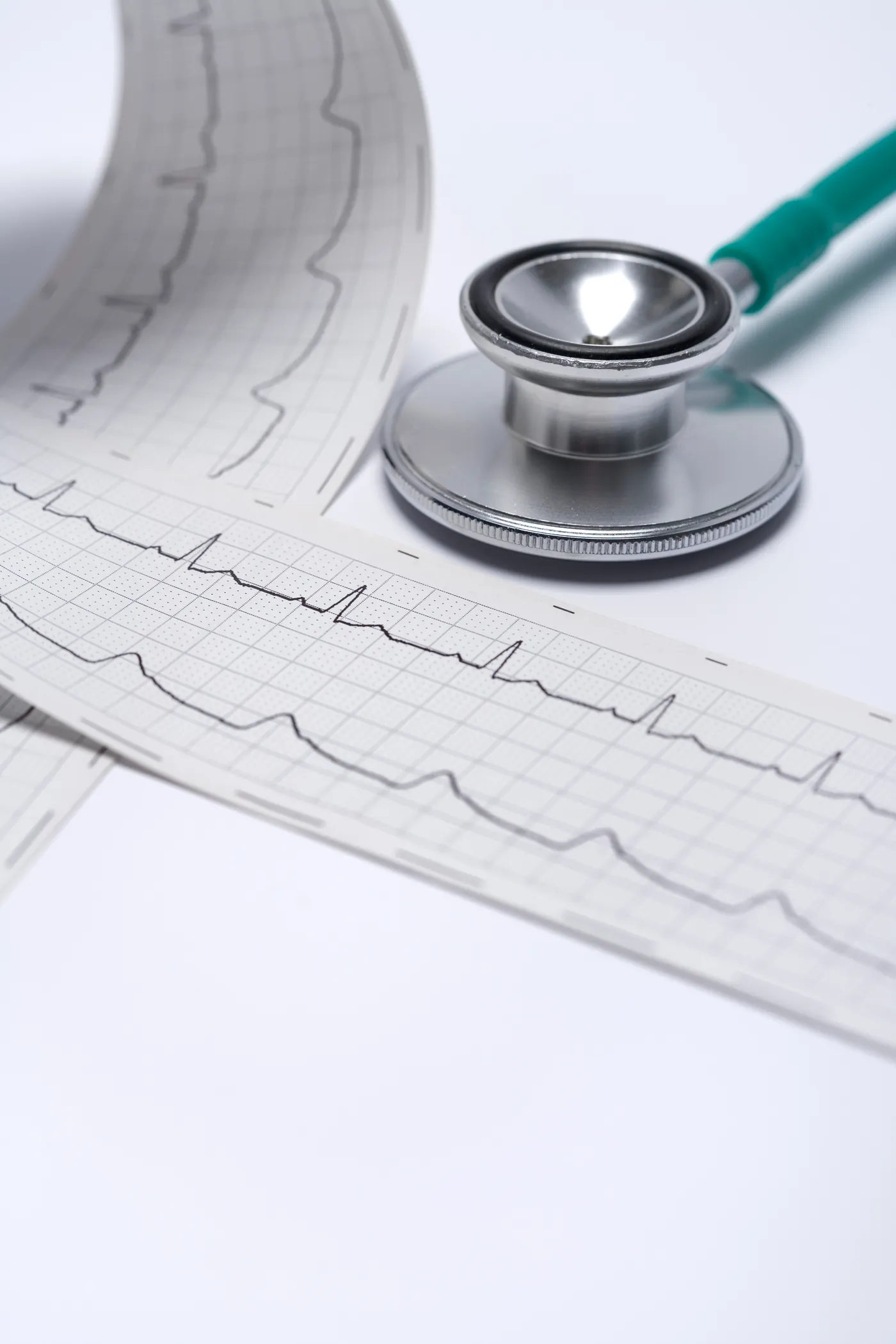
Less theory. More application.
Most CME is passive. Day 2 here is hands-on: you perform a real 12-lead ECG and interpret tracings in small groups.
9 SCFHS-accredited CME hours
Counted toward your continuing education. Reference ACA-20260002280.
Taught by cardiologists
Associate and assistant professors of cardiology who read these tracings every day.
Day 2 is hands-on
Perform a real 12-lead ECG and interpret tracings in small groups and breakout rooms.
Built for daily practice
Content designed for family, internal, emergency, and general medicine — where the ECG is a daily decision.
A small, focused cohort
SCFHS caps accredited seats at 50. Small groups mean your questions actually get answered.
By Monday evening, you'll read ECGs the way a cardiologist does.
-
01Walk through any 12-lead tracing with a fixed, step-by-step method — no more starting from zero.
-
02Recognize normal sinus rhythm instantly, and name what's abnormal and why it matters.
-
03Identify the rhythm, site of origin, possible causes, and clinical significance at a glance.
-
04Perform a 12-lead ECG correctly and interpret it with the same system cardiologists use.
-
05Connect what you see on the tracing to what's happening electrically and mechanically in the heart.
What this course covers.
A systematic path from the anatomy of the heart's conduction system to reading any tracing you're shown.
Normal anatomy & physiology of the heart's conduction system
Electrophysiology of the electrical & mechanical events of the cardiac cycle
The role of each component of the electrical conduction system
Monitoring techniques that make ECG interpretation possible
How to perform a twelve-lead ECG
How the tracing reflects the electrical activity of the heart
The sequence of steps in ECG interpretation
The characteristics of normal sinus rhythm
Identify the rhythm, site of origin, causes & significance of any tracing
Two days, one clear path from basics to mastery.
Lectures & Q&A
Mini-lectures, demonstrations, videos, and Q&A — covering conduction system anatomy and physiology, electrophysiology of the cardiac cycle, monitoring techniques, and systematic 12-lead interpretation. Coffee and prayer breaks throughout.
Hands-on Practicum & Discussion
Hands-on practicum in small groups and breakout rooms — perform a 12-lead ECG, interpret real tracings, and join group discussions. Coffee and prayer breaks throughout.
Learn from cardiologists who read ECGs all day.
Dr. Muhammad Reihan
Dr. Mohammed Moanes Mohy El Din
Dr. Wafaa Adam
Everything you need to know.
-
LocationBatterjee Medical College – Jeddah Campus · Medical Laboratories, Ground Floor, Main Building
-
DatesSunday & Monday, 13 & 14 September 2026
-
Time8:30 AM – 5:30 PM daily
-
FormatGroup learning, interactive
-
AccreditationSCFHS # ACA-20260002280
-
CME Hours9
-
Capacity50 accredited seats + 50 student / non-CME seats
Two ways to join — pick the track that fits.
Rather than a single price, choose the track that matches why you're attending.
Accredited CME Seat
For licensed healthcare practitioners who want the 9 SCFHS-accredited CME hours.
Choose this if you need the hours.
Reserve My Seat →Knowledge Seat
For students and participants who don't require CME hours.
Choose this if you're attending for learning, not credit.
Reserve My Seat →Your questions, answered.
The next ECG you read deserves a reading you can trust.
9 accredited CME hours. Two days with cardiologists. A method you'll use on every shift. Accredited seats are limited to 50, and registration closes the day before the workshop — or when seats are full.
Questions? Email us at labtech10.jed@bmc.edu.sa

